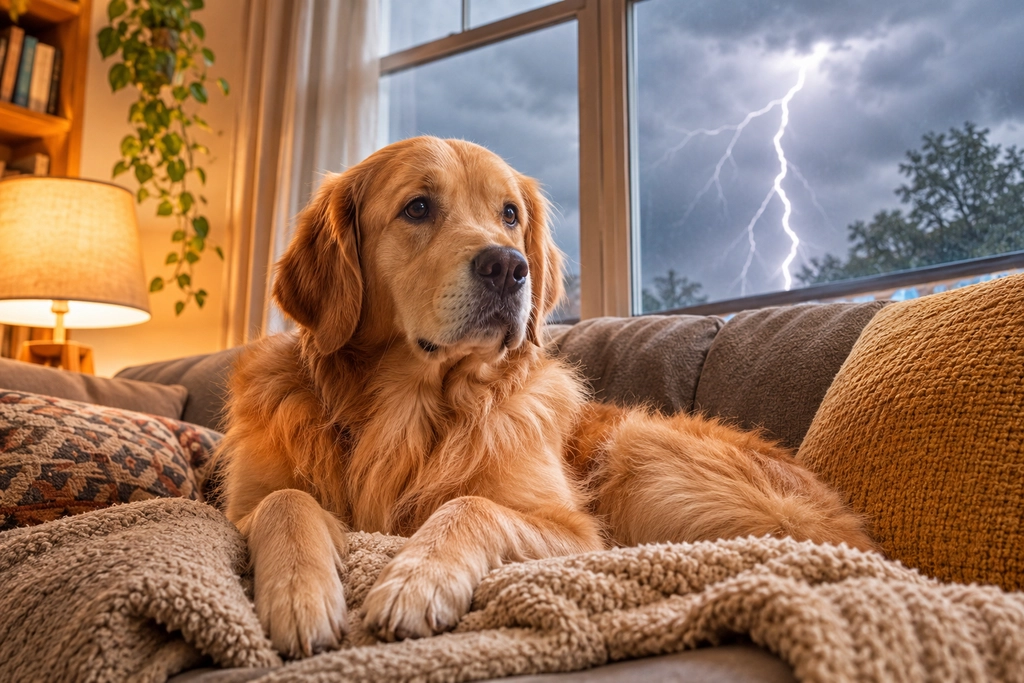
 0
 0
Key Findings at a Glance
- → 25% to 50% of dogs experience some form of noise anxiety Thunderstorms are among the common triggers for noise anxiety in dogs, based on information from Bark & Whiskers reviewed by Dr. Tracy Duffner. [Hallie Hill Animal Sanctuary]
- → About one-third of dogs have anxiety Thunderstorms rank at the top of the list of anxiety-inducing situations for dogs, according to a cited study. [Humane Society of North Texas]
- → Static electricity, not thunder volume, is a major trigger Dr. Nicholas Dodman, director of the Animal Behavior department at Tufts University's Cummings School of Veterinary Medicine, says dogs may feel numerous static shocks during storms, prompting them to seek grounded areas like bathtubs and basements. [Humane Society of North Texas]
- → Herding and working breeds more reactive to storms Border Collies, Australian Shepherds, and German Shepherds tend to show more sensitivity to environmental stimuli like thunderstorms. [4 Paws Animal Clinic]
- → Thunderstorm phobia is more common in herding breeds, PetMD confirms PetMD notes a genetic predisposition for emotional reactivity appears more common in herding breeds, alongside lack of early storm exposure and unintentional reinforcement by owners. [PetMD]
- → Thunderstorm anxiety can cause physical harm like dental and skin damage PetMD lists cardiovascular (high heart rate), endocrine (increased cortisol, hyperglycemia), musculoskeletal (trauma from escape attempts), dental, and skin injuries as physical effects of chronic storm anxiety. [PetMD]
Thunderstorm season brings a familiar scene into many homes: a dog pacing, panting, or wedged behind the couch long before rain hits the window. Veterinary researchers have spent years trying to pin down what sets this fear off, and the answers touch on biology, breed history, and even static electricity in the air. This piece walks through how common the fear actually is, which breeds show it most, what it does to a dog's body over time, and what experts recommend owners do about it. By the end, a reader should be able to tell whether their own dog's reaction fits a known pattern, and which steps actually have backing behind them.
1How Many Dogs Are Actually Scared of Storms?
Nearly 40 percent of dogs show some form of noise-related anxiety, according to 4 Paws Animal Clinic in 2026. Hallie Hill Animal Sanctuary places the broader range between 25 and 50 percent, while the Humane Society of North Texas reports about one-third of dogs have general anxiety, with storms topping the trigger list.
The gap between these numbers matters less than the pattern they all point to. Whether the figure is 33 percent from the Humane Society of North Texas or the wider 25-to-50 percent band cited by Hallie Hill Animal Sanctuary, every source agrees storms sit near or at the top of the trigger list. That agreement across three separate sources, 4 Paws Animal Clinic, Hallie Hill Animal Sanctuary, and the Humane Society of North Texas, is what makes the 40 percent figure worth taking seriously rather than treating it as an outlier estimate. Owners who have already noticed signs of dog anxiety during thunderstorms are, statistically, far from alone.
2Storm Fear Gets Worse With Age, Not Just Scarier at the Start
4 Paws Animal Clinic documents a pattern where a dog trembling mildly at age two can develop full panic by age five if the fear is never addressed. The condition tends to build gradually with repeated exposure rather than appearing suddenly in adulthood.
That three-year window, from mild trembling at two to full panic at five, is the clearest sign that storm phobia is progressive rather than fixed. Left untreated, each storm season appears to reinforce the fear instead of letting the dog adjust to it naturally.
3Which Breeds Fear Thunderstorms the Most?
Border Collies, Australian Shepherds, and German Shepherds show more sensitivity to environmental stimuli like thunder and lightning, according to 4 Paws Animal Clinic. PetMD links this to a genetic tendency toward emotional reactivity found more often in herding breeds.
Herding breeds were bred for constant alertness, scanning for movement, sound, and changes in the environment around livestock. It makes sense, then, that Border Collies, Australian Shepherds, and German Shepherds carry that same heightened watchfulness into a thunderstorm, where flashes of light and sudden booms read as threats rather than background noise. PetMD adds two more pieces to the picture: lack of early exposure to storms during puppyhood, and owners who unintentionally reward fearful behavior with extra comforting, both of which can deepen the reaction in any breed, not just herders. None of this means other breeds are immune, but the herding group shows up often enough across sources to count as a genuine pattern rather than a coincidence.
4What the Experts Say Is Really Going On
Dr. Nicholas Dodman of Tufts University's Cummings School of Veterinary Medicine points to static electricity buildup, not thunder volume, as a major trigger, driving dogs toward grounded spots like bathtubs. Dr. Marty Becker recommends dryer sheets to cut static, while Trista Miller of the American Kennel Club focuses on reading canine body language.
| METRIC | VALUE | SOURCE |
|---|---|---|
| Expert cited on body language reading | Trista Miller person | American Kennel Club |
| Veterinarian recommending dryer sheets for static | Dr. Marty Becker person | Humane Society of North Texas |
| Source: American Kennel Club | ||
Dodman's static electricity theory reframes the entire problem. If a dog is reacting to repeated small shocks rather than just loud noise, hiding in a bathtub or basement is not panic without logic, it is the dog seeking a grounded surface where the shocks stop. Dr. Marty Becker's dryer sheet recommendation, cited by the Humane Society of North Texas, follows directly from that theory, since wiping a dog's coat can reduce static charge. Trista Miller's body language work, referenced by the American Kennel Club, adds a separate but related layer, since catching early pacing or lip-licking before full panic sets in gives owners a chance to act before the fear escalates. Readers looking for step-by-step responses can find more in simple tips to calm a dog's fear of thunderstorms or in guidance on managing mild reactions in dogs during thunderstorms before they turn severe.
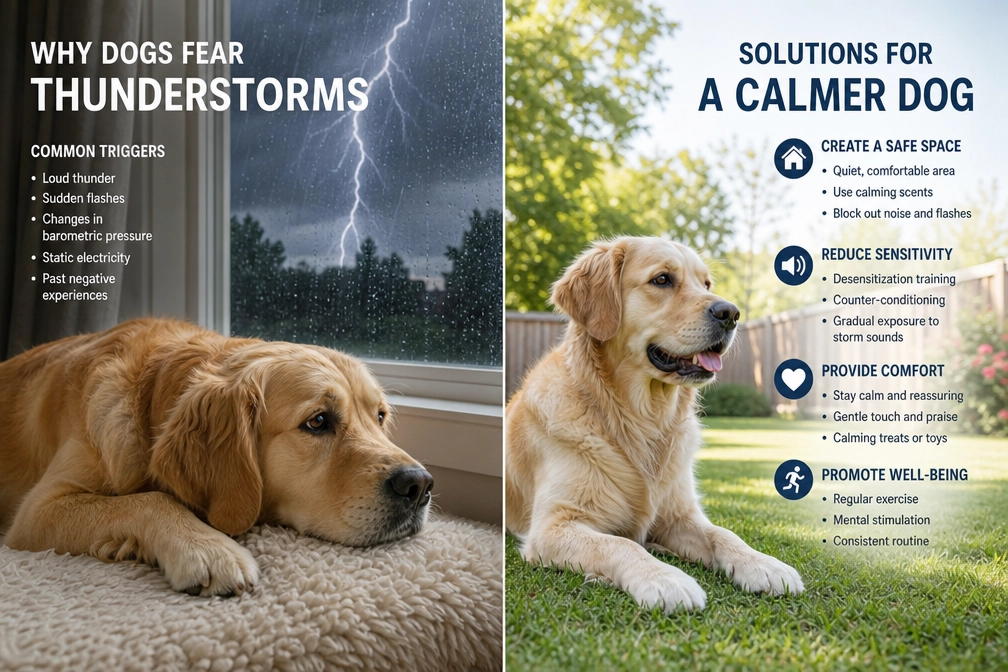
The Data Behind the Story
The percent figures on this page run from 25 percent (dogs with noise anxiety, range low) to 50 percent (dogs with noise anxiety, range high), a 2x spread. That spread is the practical range the sources support; anything outside it would need a new source, not a guess.
The data is not evenly spread: the prevalence section carries 4 of the 12 metrics on this page, while trends carries 2 and leans mostly on background and analysis. Read the two together, since one is built on measurement and the other explains why those measurements matter.
What the Numbers Mean for Dog Owners
Taken together, the data builds a consistent case. Nearly 40 percent of dogs show noise-related anxiety per 4 Paws Animal Clinic, with estimates from Hallie Hill Animal Sanctuary and the Humane Society of North Texas landing in the same general territory. Herding breeds like Border Collies, Australian Shepherds, and German Shepherds carry a genetic edge toward this reactivity, according to both 4 Paws Animal Clinic and PetMD, and the fear tends to worsen over a dog's lifetime, from mild trembling at two years old to full panic by five, if nothing is done.
Dr. Nicholas Dodman's static electricity theory offers a practical starting point since it points to a fixable cause rather than an unsolvable fear of noise alone. Dryer sheets, grounded hiding spots, and reading early body language signals, as Trista Miller recommends, cost nothing and can prevent years of escalation. Given that PetMD links chronic storm anxiety to real physical harm, including cardiovascular strain, dental damage, and skin injuries, treating a trembling two-year-old dog now is far simpler than managing a panicked five-year-old later.
Methodology
Prevalence figures for noise and storm anxiety vary by source (25% to 50%), reflecting differing study populations and survey methods rather than a single verified national figure. Some claims, such as the static electricity trigger, rely on expert commentary rather than large-scale clinical trials. Case examples like the golden retriever are anecdotal and used for illustration, not as statistical proof.
- Sources consulted: 10
- Sources cited: 5
- Data range: 2025-2026
- Freshness: 4 current-year, 1 last-year, 0 older
- Update schedule: Quarterly
Frequently Asked Questions
Why are dogs so scared of storms?
Dogs pick up on more than loud booms. Dr. Nicholas Dodman of Tufts University notes that static electricity buildup during storms may give dogs repeated small shocks, pushing them to hide in bathtubs or basements where surfaces feel grounded. Combined with changes in air pressure and darkening skies, this makes storms a full-body sensory event for a dog, not just a noise problem. [Humane Society of North Texas]
How common is storm anxiety in dogs?
It is far from rare. Nearly 40% of dogs show some form of noise-related anxiety, with thunderstorms ranking among the top triggers, according to 4 Paws Animal Clinic. Other estimates place noise anxiety between 25% and 50% of the dog population, so a trembling, pacing dog during a storm is a common sight for many pet owners. [4 Paws Animal Clinic]
Which dog breeds fear thunderstorms the most?
Herding and working breeds tend to react more strongly. Border Collies, Australian Shepherds, and German Shepherds show higher sensitivity to environmental stimuli like thunder and lightning, per 4 Paws Animal Clinic. PetMD adds that this pattern suggests a genetic link to emotional reactivity, though lack of early exposure to storms also plays a role in any breed. [PetMD]
Can a dog's fear of storms get worse over time?
Yes, and this surprises many owners. A dog that trembles mildly at age two can develop full panic responses by age five if the fear goes untreated, according to 4 Paws Animal Clinic. Repeated exposure without help tends to deepen the fear response rather than let the dog get used to it, so early action matters. [4 Paws Animal Clinic]
Is thunderstorm phobia bad for a dog's health?
It can cause real physical harm, not just emotional stress. PetMD lists raised heart rate, increased cortisol and blood sugar, muscle injuries from panicked escape attempts, plus dental and skin damage from chewing or scratching during episodes. A dog that regularly panics during storms carries that strain on its body each time, even after the storm passes. [PetMD]
Do dogs know a storm is coming before it starts?
Many do, and that early warning adds to their fear. Dogs sense dropping barometric pressure and static charge buildup before rain or thunder arrive, so they may start pacing, panting, or hiding well before a person notices any storm signs outside. This early sensitivity is part of why static electricity is flagged as a major trigger alongside thunder itself. [Humane Society of North Texas]
What does a dog with storm anxiety look like?
Signs range from mild to severe. A calm, normally bold dog like Hunter, a four-year-old golden retriever described by Hobe Sound Veterinary Clinic, can still shake, drool, or try to hide once thunder starts. Other common signs include pacing, whining, clinginess, and attempts to squeeze into small spaces like closets or under furniture. [Hobe Sound Veterinary Clinic]
Can older dogs develop a new fear of thunderstorms?
Yes, fear of storms is not only something puppies pick up. 4 Paws Animal Clinic points to case patterns where mild trembling at two years old can grow into full panic by five, showing that the condition often builds gradually with repeated storm exposure rather than appearing fully formed in young dogs. [4 Paws Animal Clinic]
Is thunderstorm fear the same as general anxiety in dogs?
They overlap but are not identical. About one-third of dogs have some general anxiety, and thunderstorms rank at the top of common triggers, per the Humane Society of North Texas. A dog can fear storms specifically while otherwise behaving calmly, or storm fear can be one piece of a wider pattern of noise and situational anxiety. [Humane Society of North Texas]
How can owners help a dog through a thunderstorm?
A calm, grounded space helps. Vets suggest creating a safe den-like spot, using white noise, and avoiding punishment for fearful behavior since that only adds stress. Because static shock may play a role in fear, some owners find grounding solutions like anti-static wraps reduce signs of distress during storms, though every dog responds a little differently. [PetMD]
Sources & References
- 4 Paws Animal Clinic. "Dog Scared of Thunderstorms? Here's How to Help Them Cope" — 4pawsanimalclinic.com. Accessed 2026-11-10.
- Hallie Hill Animal Sanctuary. "Helping Your Dog Feel Safer During Thunderstorms" — halliehill.com. Accessed 2026-11-10.
- Humane Society of North Texas. "The Surprising Reason Dogs Hate Thunderstorms—and How to Help" — hsnt.org. Accessed 2026-11-10.
- PetMD. "Thunderstorm Phobia in Dogs" — petmd.com. Accessed 2026-11-10.
- Hobe Sound Veterinary Clinic. "Managing Dog Thunderstorm Anxiety" — hobesoundvet.com. Accessed 2026-11-10.
Last updated: November 10, 2026