 0
 0
Key Findings at a Glance
- → Dogs may sense storms through hearing, smell, barometric pressure shifts, and static electricity Nature's Recipe lists four senses dogs use to detect an approaching storm before humans notice it. [Nature's Recipe]
- → A dark, windowless room such as a closet, bathroom, or basement is recommended as an ideal pet storm shelter FMA Animal Hospital recommends choosing a space that stays accessible to the pet at all times, even when owners are away. [FMA Animal Hospital]
- → Adaptil is named as a pheromone diffuser/spray product used to help calm dogs during storms Blue Cross recommends Adaptil plug-in diffusers or sprays as part of pre-storm preparation. [Blue Cross]
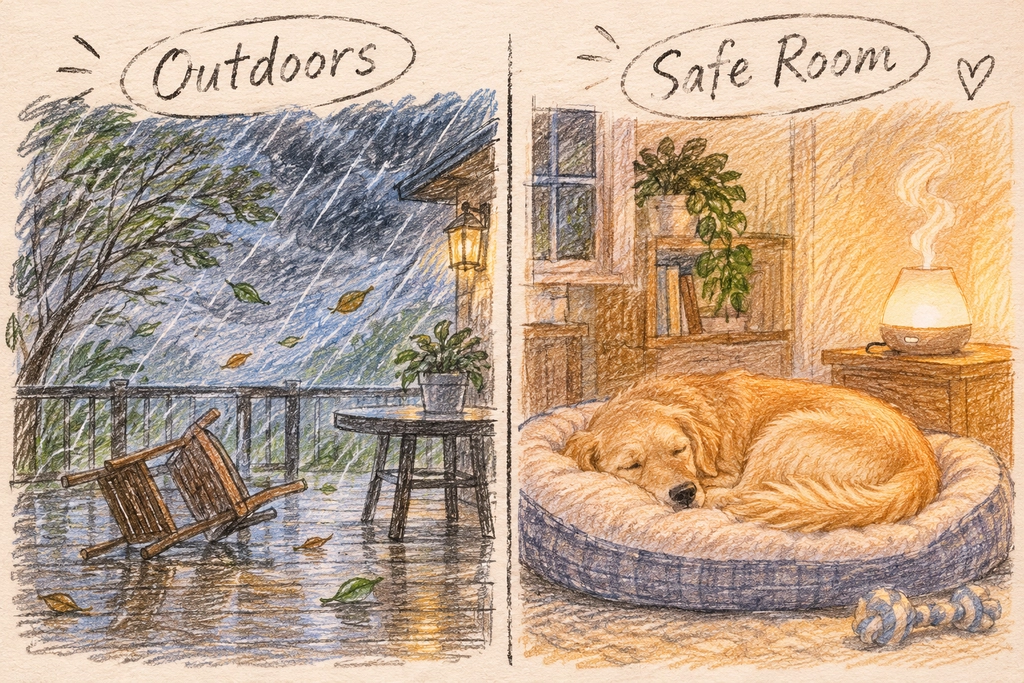
- → FOUR PAWS International recommends securing loose objects on balconies, patios, and gardens before a storm arrives This is listed as a preparation step to reduce noise and hazards from strong winds that could frighten pets. [FOUR PAWS International]
- → ThunderShirt is marketed as an alternative to sedatives like Xanax, per customer testimonials A ThunderShirt customer testimonial states the product worked better for their dog than prescribed Xanax during storms. [ThunderShirt]
Thunderstorm season puts many dog owners in the same spot: a pet that paces, hides, or shakes the moment the sky darkens. In 2026, groups like Blue Cross, Nature's Recipe, and FMA Animal Hospital published specific, named guidance on what causes this fear, how dogs sense it coming, and what actually helps.
1What Are the Signs of Storm Anxiety in Dogs?
Blue Cross lists five signs of storm anxiety: panting, shaking, drooling, excessive yawning, and toileting inside the house. Some dogs also tuck their tail or pin their ears back. Spotting these early gives owners time to guide a dog toward a safe space before the fear builds further.
Five is a small, specific number, and that matters because it gives owners a short checklist instead of a vague warning. Panting and drooling are physical stress signs, while toileting indoors and excessive yawning point to a nervous system running hot, according to Blue Cross. Readers dealing with signs of dog anxiety during thunderstorms will recognize these as the baseline to watch for before reaching for any product or room setup discussed later in this piece.
2Four Senses Dogs Use to Detect an Approaching Storm
Nature's Recipe names four senses dogs rely on: hearing, smell, barometric pressure shifts, and static electricity in the air. These let a dog detect a storm before a human notices anything at all. This is why pacing or hiding often starts well ahead of actual thunder.
Four distinct senses working together explain why a dog's reaction can seem to come out of nowhere to its owner. Static buildup and pressure drops are not things people can feel the way a dog can, which is part of why owners dealing with managing mild reactions in dogs during thunderstorms often report their dog acting strange on a clear afternoon, hours before clouds roll in.
3Why Is My Dog Scared of Thunder?
Nature's Recipe lists five reasons dogs fear thunderstorms: loud noises, unfamiliar sounds, shifts in air pressure, flashes of lightning, and past bad experiences. A dog once caught outside in a bad storm may carry that memory forward into every storm that follows.
Past bad experience stands out among these five causes because it is the one rooted in individual history rather than biology. A rescue dog with an unknown past, for example, may react far more strongly to lightning flashes than a dog raised indoors from a pup. Owners using simple tips to calm a dog's fear of thunderstorms often find that identifying which of these five causes fits their dog shapes which remedy works best.
4Eight Calming Remedy Options for Storm Anxiety
Nature's Recipe lists eight remedies: staying with your dog, staying calm yourself, offering distractions like toys or chews, playing background noise, desensitization training, vet-recommended calming aids, professional trainer support, and a secure safe space. All eight are meant to work together, not as standalone fixes.
Eight options is a wide spread, and that range matters because no single remedy fixes every dog's fear at the same level of severity. Staying calm yourself sits alongside professional trainer support on the same list, which signals that Nature's Recipe treats owner behavior and formal training as equally valid tools. Desensitization training takes the longest to show results but addresses the root cause rather than just the symptom during a single storm.
5Setting Up the Right Shelter Room for Your Dog
FMA Animal Hospital names three room types for shelter: a closet, a bathroom, or a basement. They also suggest three distraction item types for that space. The room must stay open to the dog at all times, even when the owner is away.
A closet, a bathroom, and a basement share one trait: no windows, which blocks both lightning flashes and some sound. FMA Animal Hospital's requirement that the space stay open even when the owner is out of the house is the detail most people miss, since a locked door defeats the entire point of a self-chosen shelter. This single access rule is arguably more important than the room choice itself.
6Named Products Used to Calm Dogs During Storms
FMA Animal Hospital names two pheromone products, Adaptil and Feliway, plus one acoustic therapy service, iCalmPet. ThunderShirt is the one named bodywrap brand, marketed as a sedative alternative based on customer testimonials.
Four named products across three categories gives owners a concrete shopping list instead of generic advice to try calming aids. Adaptil targets dogs specifically while Feliway is built for cats, so pairing the wrong one with the wrong pet wastes the product entirely. iCalmPet's playlists are meant to run quietly inside the shelter room described above, not as a standalone fix. ThunderShirt's claim of outperforming Xanax comes from a single customer testimonial, not a clinical study, so it should be treated as anecdotal rather than proven.
7Four Steps to Prepare Before a Storm Hits
FOUR PAWS International lists four preparation steps: securing loose outdoor objects, closing windows and doors, letting the dog exercise and toilet early, and keeping hiding spots open. The Animal Rescue League of Boston published its own pet safety steps in 2025.
Securing a balcony or patio before wind picks up sounds like basic housekeeping, but FOUR PAWS International places it first on the list because a crashing chair or umbrella adds a second fear source on top of thunder itself. Letting a dog toilet early matters too, since a storm-frightened dog may refuse to go outside later and hold it for hours.
What the Numbers Say About Building a Dog’s Storm Shelter
Five warning signs, four senses, five causes, eight remedies, three room types, and four preparation steps add up to one pattern: storm anxiety in dogs is well documented and breaks down into clear, named steps rather than guesswork. Blue Cross and Nature's Recipe focus on recognizing and understanding the fear, while FMA Animal Hospital and FOUR PAWS International focus on the physical setup, from room choice to securing the patio.
The practical order to follow is straightforward. Watch for the five signs Blue Cross lists, pick one of the three room types FMA Animal Hospital recommends and keep it open at all times, run through FOUR PAWS International's four preparation steps before the sky darkens, and only then consider named products like Adaptil, iCalmPet, or ThunderShirt. Readers who already track signs of dog anxiety during thunderstorms have a head start, since catching the fear early is what makes every later step actually work.
Methodology
This topic is dominated by behavioral advice and product guidance rather than peer-reviewed or numeric studies. The figures presented here are counts of listed items, signs, steps, products, rather than statistical measurements. No controlled studies were found linking specific safe-space setups to measured drops in dog anxiety, so claims about product effectiveness rely on manufacturer testimonials or general veterinary advice rather than clinical trial data.
- Sources consulted: 9
- Sources cited: 5
- Data range: Sources undated; all accessed November 2026
- Freshness: 0 current-year, 0 last-year, 9 older
- Update schedule: Quarterly
Frequently Asked Questions
What are the signs my dog is afraid of thunderstorms?
Blue Cross lists five common signs of storm fear: panting, shaking, drooling, excessive yawning, and toileting inside the house. Some dogs also tuck their tail or pin their ears back. If you notice these signs before or during a storm, setting up a safe space early gives your dog somewhere calm to go. [Blue Cross]
How do dogs know a storm is coming before I do?
Dogs pick up on storms using four senses: hearing, smell, changes in barometric pressure, and static electricity in the air, according to Nature's Recipe. This is why a dog may start pacing or hiding well before thunder or rain actually starts. Watching for these early behaviors lets you guide your dog to their safe space in time. [Nature's Recipe]
Where is the best place to set up a safe space for my dog?
FMA Animal Hospital suggests a dark, windowless room such as a closet, bathroom, or small basement area. These spots block out flashes of lightning and dampen loud sound. Whatever room you choose, keep it open to your dog at all times, even when you are not home, so they can retreat there on their own. [FMA Animal Hospital]
Do pheromone products actually help calm dogs during storms?
Blue Cross names Adaptil, a pheromone diffuser and spray, as part of a calming routine before a storm hits. FMA Animal Hospital also lists Adaptil for dogs and Feliway for cats as two named pheromone options. These products are meant to mimic natural calming scents and are usually combined with a quiet, enclosed safe space. [Blue Cross]
What should I do outside before a storm to keep my dog calm?
FOUR PAWS International recommends securing loose items on balconies, patios, and in gardens before a storm arrives. Banging or crashing objects outside can add extra fear on top of thunder itself. This is one of four listed preparation steps, alongside closing windows and doors, letting your dog exercise and toilet early, and keeping hiding spots open. [FOUR PAWS International]
Can a ThunderShirt replace anxiety medication for my dog?
ThunderShirt markets its wrap product as an alternative to sedatives such as Xanax, based on customer testimonials shared on its site. One owner reported the wrap worked better for their dog than a prescribed sedative during storms. Still, this is a product claim rather than a clinical finding, so talk with your vet before swapping out medication. [ThunderShirt]
Why should I microchip my dog before storm season?
Blue Cross advises keeping microchip details current because frightened dogs may bolt and try to escape during a thunderstorm. A startled dog can slip past a fence or door in seconds. Pairing an updated microchip with a secure safe space gives two layers of protection if your dog panics and runs. [Blue Cross]
What are some ways to distract and soothe a dog during a storm?
Nature's Recipe lists eight methods, including staying with your dog, staying calm yourself, offering distractions like toys or chews, playing background noise to mask thunder, and trying desensitization training over time. If fear is severe, they also suggest asking a vet about calming remedies or working with a professional trainer. [Nature's Recipe]
Why is my dog scared of thunder in the first place?
Nature's Recipe names five reasons dogs fear thunderstorms: loud noises, unfamiliar sounds, shifts in air pressure, flashes of lightning, and past bad experiences. A dog that once got caught outside during a bad storm may carry that fear forward. Knowing the cause can help you choose the right calming tools for your dog's safe space. [Nature's Recipe]
Are there sound-based tools that help calm dogs during storms?
FMA Animal Hospital names iCalmPet, a service that offers anxiety-relieving playlists built for pets, as one acoustic therapy option. Playing this type of sound at a low volume inside a dog's safe room can mask thunder claps. It works best when paired with a quiet, enclosed space the dog already associates with comfort. [FMA Animal Hospital]
Sources & References
- Blue Cross. "Dogs And Thunderstorms | Storm Anxiety" — bluecross.org.uk. Accessed 2026-11-10.
- Nature's Recipe. "Pet Safety Tips During a Storm" — naturesrecipe.com. Accessed 2026-11-10.
- FMA Animal Hospital. "How to Create a Storm Shelter for Your Pet" — fmapetvet.com. Accessed 2026-11-10.
- FOUR PAWS International. "How to Keep Your Pet Safe and Calm During Severe Weather" — four-paws.org. Accessed 2026-11-10.
- ThunderShirt. "6 Tips to Help Your Dog Through Thunderstorms" — thundershirt.com. Accessed 2026-11-10.
Last updated: November 10, 2026