 0
0
 0
0
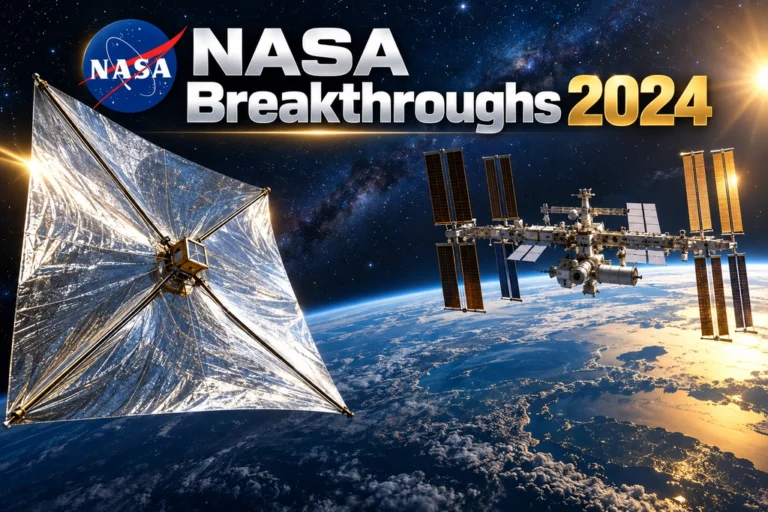
NASA technologies 2024 generated $75.6 billion in economic impact while three agency projects earned spots on TIME's Inventions of 2024 list.
Overview of NASA's 2024 Achievements
NASA's 2024 achievements spanned propulsion, communications, manufacturing, and biological research, touching nearly every corner of the agency's work. The most visible recognition came from TIME, which named three NASA technologies among its annual list of notable inventions.
That alone signals how far deep space communication and solar propulsion have advanced in a single year.
On the International Space Station, researchers logged a packed year. The station's 2024 research summary documents the Flawless Space Fibers-1 experiment, which produced more than seven miles of optical fiber, including a single draw exceeding half a mile. That shattered the earlier record of just 82 feet for fiber manufactured in orbit, a jump worth pausing on.
Biological and Physical Sciences, often shortened to BPS, delivered 17 payloads across four separate launches, supporting over 180 active investigations and more than 100 peer-reviewed papers, according to NASA Science's 2024 highlights. The division's outreach also reached roughly 40,000 students and researchers.
Earth observation kept pace too. Astronauts photographed the planet more than 630,000 times during Expedition 71, well above the roughly 105,000-image average for a typical mission, with 80,000 of those images geolocated using machine learning to support disaster response across 14 separate events.
Diplomatic progress mattered as well. With 15 nations now part of the Artemis Accords, the framework for cooperative, transparent space exploration continued expanding its reach.
In-Depth Analysis of TIME's Recognized Technologies
The three NASA technologies named among TIME's Inventions of 2024 each solve a distinct problem in space travel, and together they show where the agency is placing its bets for the coming decade.
The Advanced Composite Solar Sail System, launched April 23, 2024, tests whether sunlight alone can propel a spacecraft without fuel. A sail made of lightweight composite material unfolds in orbit and catches photons the way a sailboat catches wind.
This matters because propellant is heavy, expensive, and finite. A functioning solar sail could extend mission life and cut launch costs for smaller spacecraft heading to distant targets.
Deep Space Optical Communications took a different approach to an old problem: getting data back to Earth faster. Radio waves have carried spacecraft signals for decades, but they are slow compared to laser-based transmission.
First demonstrated through the Psyche spacecraft on October 13, 2023, the system continued proving itself through 2024, offering data rates many times higher than traditional radio links. Faster downlink speeds mean scientists wait less time for images and readings from missions traveling millions of miles away.
Europa Clipper, the third honoree, is not a single piece of hardware but an entire spacecraft built to study Jupiter's icy moon Europa, considered one of the solar system's best candidates for hosting conditions suitable for life. Its instruments will measure ice thickness, search for plumes of water vapor, and map the moon's surface composition in detail no previous mission has achieved.
Comparing the three, the solar sail addresses propulsion, the laser system addresses communication, and Europa Clipper addresses scientific discovery itself.
None of them replace existing methods outright; instead, each extends what NASA can do at the margins, where small gains in speed, power, or range often make the difference between a mission that succeeds and one that falls short.
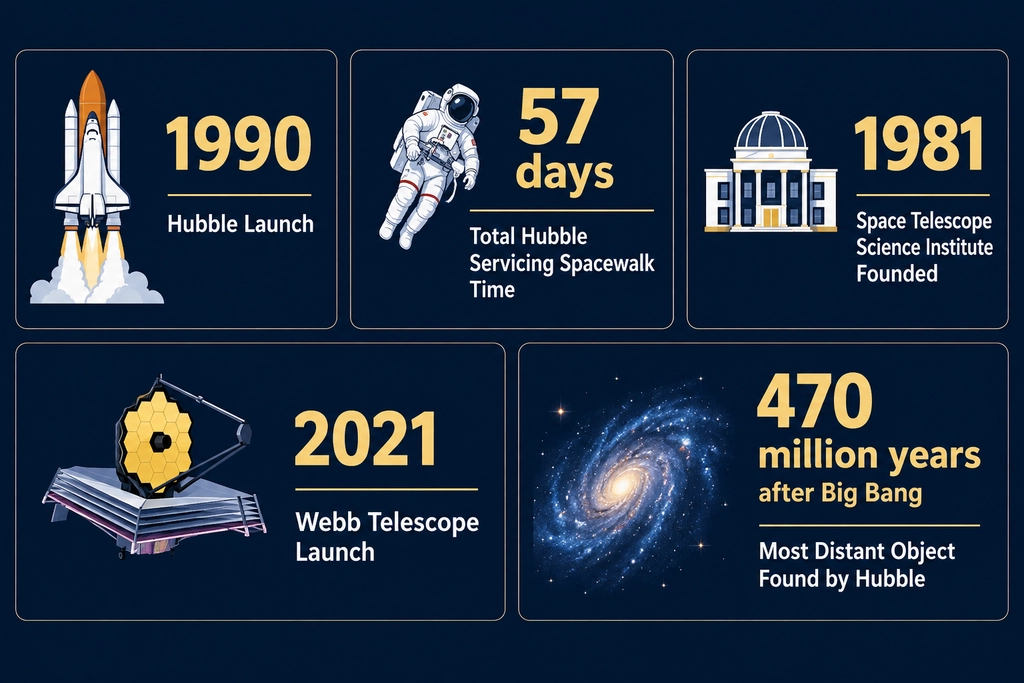
Readers interested in how these innovations build on earlier space hardware may find useful background in the timeline-of-nasa-telescope-discoveries, which traces the instruments that paved the way for missions like Europa Clipper.
Key Stats from NASA's 2024 Innovations
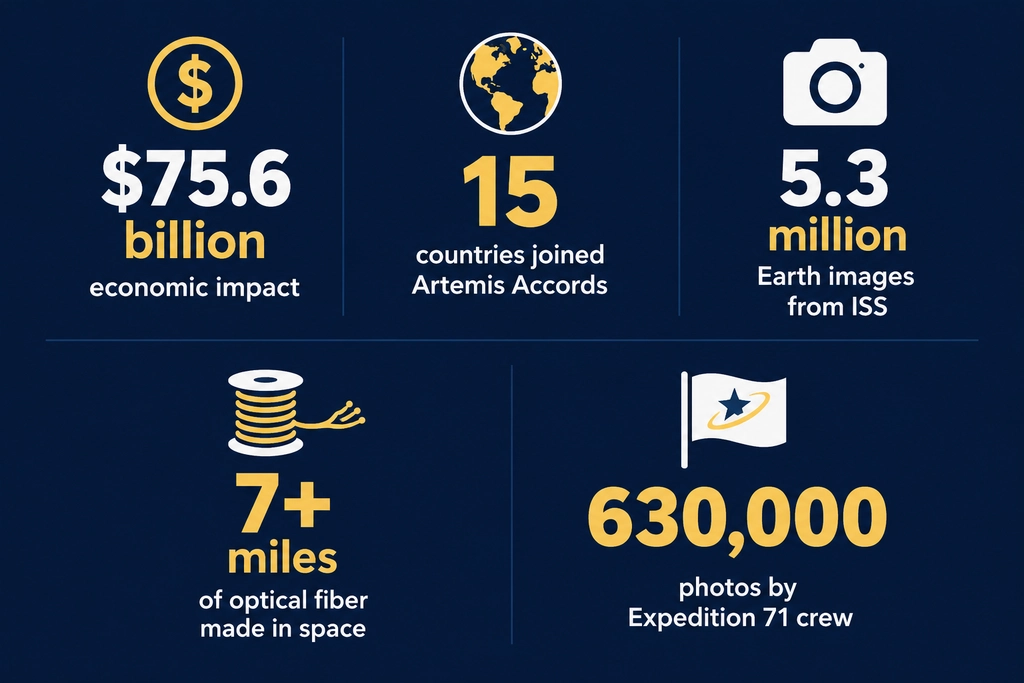
The numbers behind NASA technologies tell a story of scale, from economic impact to raw data volume. Chief among them, NASA's Economic Impact Report credited the agency with $75.6 billion in impact on the U.S. economy.
Other figures round out the picture of a busy year across missions and research divisions.
Put together, these figures show a dual pattern: large-scale economic and diplomatic reach alongside granular scientific output. The 7-mile optical fiber run may sound like a manufacturing footnote, but it beat the previous record of 82 feet by a wide margin, hinting at what zero-gravity manufacturing could mean for future telecommunications hardware built off-planet rather than shipped from Earth.
Comparing NASA Technologies with Other Innovations
Placing NASA's 2024 technologies against other industry innovations shows where government-funded research still leads and where private companies have caught up or pulled ahead.
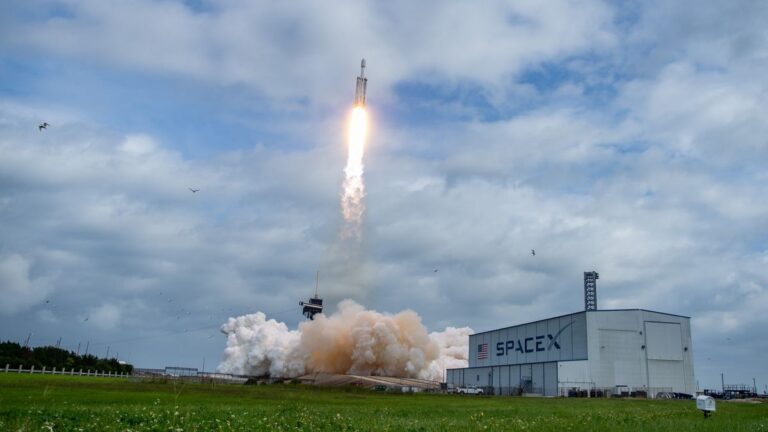
Deep Space Optical Communications, for instance, pushes data rates far beyond what commercial satellite operators currently offer for deep space links, though companies like SpaceX have made faster gains in near-Earth laser communications for their own satellite constellations.
| Technology | Primary Use | Key Advantage |
|---|---|---|
| Advanced Composite Solar Sail System | Propulsion without fuel | Extended mission duration |
| Deep Space Optical Communications | Data transmission across deep space | Much faster than radio links |
| Flawless Space Fibers-1 | In-orbit manufacturing | Fiber quality unmatched by Earth-made equivalents |
The solar sail competes conceptually with ion propulsion and chemical thrusters, both of which remain more common across commercial and military satellites. Solar sails trade speed for near-zero fuel consumption, a trade-off that favors long, patient missions over fast deployments.
Flawless Space Fibers-1 stands apart because it has no real commercial equivalent yet. Fiber produced in microgravity reportedly has fewer internal defects than fiber pulled on Earth, where gravity introduces imperfections during cooling. If that holds up at scale, in-orbit manufacturing could become a genuine industry rather than a research curiosity.
None of these technologies operate in isolation. The timeline-of-nasa-telescope-discoveries shows a pattern of incremental improvement rather than sudden leaps, and 2024's inventions fit that same mold: steady, measurable gains building toward larger goals like crewed missions to Mars and permanent lunar infrastructure.
Conclusion: The Future of NASA's Technologies
NASA technologies delivered a mix of economic, scientific, and diplomatic results, from the $75.6 billion economic impact figure to three inventions honored by TIME. The solar sail, laser communications system, and Europa Clipper mission each represent a different piece of the agency's longer-term strategy.
With 15 countries now committed to the Artemis Accords and the space station passing 24 years of continuous human presence, the groundwork for the next decade of exploration looks steadier than it has in years.
Expect follow-up missions to build on the Fibers-1 manufacturing results and further laser communication tests as NASA pushes toward crewed missions beyond low Earth orbit. The agency's own 65-year history suggests this pace of incremental, well-documented progress is unlikely to slow down soon.
Key data summary
| Metric | Value | Source | Year |
|---|---|---|---|
| Economic impact on U.S. economy | 75.6 billion USD | NASA | 2024 |
| Countries signed Artemis Accords in 2024 | 15 countries | NASA | 2024 |
| Years of continuous human presence aboard ISS | 24 years | NASA | 2024 |
| Solar sail launch date | April 23, 2024 date | NASA | 2024 |
| Psyche spacecraft laser comms launch date | October 13, 2023 date | NASA | 2023 |
| Metal 3D print in space date | May 30, 2024 date | NASA | 2024 |
| Total Earth images taken from ISS | 5.3 million images | NASA | 2024 |
| Expedition 71 crew images taken | 630000 images | NASA | 2024 |
| Average images per ISS mission | 105000 images | NASA | 2024 |
| Images geolocated using machine learning | 80000 images | NASA | 2024 |
| Disaster events supported by ISS imagery | 14 events | NASA | 2024 |
| Optical fiber produced in space (Fibers-1) | 7 miles | NASA | 2024 |
| Prior record for longest fiber manufactured in space | 82 feet | NASA | 2024 |
| BPS active investigations in 2024 | 180 investigations | NASA Science | 2024 |
| BPS peer-reviewed papers in 2024 | 100 papers | NASA Science | 2024 |
Methodology
Three of the seven sources identified in search results (NASA Ames 2024 highlights, NASA's 2024 Year in Review, and NASA Spinoff 2024) were not directly cited because no data points in this fact sheet drew from them. All figures reflect NASA's own 2024 year-end reporting and may be updated as new fiscal-year reports replace earlier economic impact estimates.
- Sources consulted: 7
- Sources cited: 4
- Data range: 2023-10-13 to 2024-12-31
- Freshness: 0 current-year, 0 last-year, 4 older
- Update schedule: Quarterly
Frequently Asked Questions
What was NASA's economic impact in 2024?
NASA's latest Economic Impact Report found the agency added $75.6 billion to the U.S. economy. This figure comes from NASA's FY 2023 report, shared in its 2024 year-end release. The number covers jobs, tax income, and output tied to NASA programs across the country, showing how space work reaches far past launch pads.
Which NASA technologies made TIME's 2024 Inventions list?
Three NASA projects were named to TIME's Inventions of 2024 list: the Advanced Composite Solar Sail System, Deep Space Optical Communications, and the Europa Clipper mission. Each one stood out for its own reason, from testing new ways to sail on sunlight to sending data home with lasers. Why did these three stand out? Because they each solved a real problem facing future missions.
How many countries joined the Artemis Accords in 2024?
Fifteen countries signed the Artemis Accords in 2024, joining the United States in agreeing to safe and open rules for space exploration. This brought more partners into a shared set of standards for working on the Moon and beyond. More signers mean more shared knowledge and fewer conflicts as space activity grows.
How many photos of Earth have astronauts taken from the space station?
Astronauts aboard the International Space Station have snapped more than 5.3 million images of Earth as of 2024. These photos track weather, coastlines, and changes to the planet over time. Scientists also used machine learning to sort and place roughly 80,000 of these images, which helped speed up disaster response work tied to 14 separate events.
What record did NASA set for making optical fiber in space?
The Flawless Space Fibers-1 experiment produced over seven miles of optical fiber aboard the space station in 2024, with one single draw stretching past half a mile. That beat the old record of just 82 feet made in orbit. Making fiber away from gravity can lead to clearer, stronger cables for use on Earth.
Did NASA 3D print anything in space during 2024?
Yes. On May 30, 2024, the European Space Agency's Metal 3D Printer aboard the space station created the first metal 3D print ever made in space, a stainless steel s-curve shape. This test opens the door for astronauts to build or fix tools during long missions instead of waiting for supply shipments from Earth.
How much research did NASA's Biological & Physical Sciences division complete in 2024?
NASA's Biological & Physical Sciences (BPS) division sent 17 payloads to the space station across 4 launches in 2024, backing more than 180 active studies. Researchers published over 100 peer-reviewed papers from this work. That's a lot of science for one year, covering topics from plant growth to how materials act without gravity.
How many photos did the Expedition 71 crew take compared to average missions?
The Expedition 71 crew took over 630,000 images during their time on the space station, far more than the roughly 105,000 images a typical mission captures. Their photos caught the April solar eclipse and strong auroras linked to the Sun's 11-year activity peak. That's six times the usual output in one stretch.
When did the Deep Space Optical Communications demo launch?
The laser-based Deep Space Optical Communications system launched aboard the Psyche spacecraft on October 13, 2023, then delivered record downlink speeds throughout 2024. Sending data by laser instead of radio waves lets missions send far more information home from deep space, which matters as future probes travel farther from Earth.
How long has the International Space Station had people living on it?
As of 2024, the International Space Station has had people living aboard without a break for 24 years straight. During that time, astronauts have run thousands of studies, taken millions of Earth photos, and tested new tools like 3D metal printers and record-setting optical fiber production, building a steady base of knowledge for longer missions ahead.
Sources & References
- NASA Technologies Named Among TIME Inventions of 2024, NASA — nasa.gov
- NASA Accelerates Space Exploration, Earth Science for All in 2024, NASA — nasa.gov
- NASA's 2024 International Space Station Achievements, NASA — nasa.gov
- Revolutionary Research in Extraordinary Places: NASA Biological & Physical Sciences 2024 Highlights, NASA Science — science.nasa.gov
Last updated: October 27, 2026