 0
0
 0
0
Key Findings at a Glance
- → 59 times less power The SRAM-based chip design for future space telescopes uses 59 times less power than a GPU-based alternative, addressing data-movement bottlenecks for exoplanet imaging. [Michigan Engineering News]
- → $430 million saved Reduced satellite weight from the new chip design could save $430 million over a 25-year mission timeline for the Habitable Worlds Observatory. [Michigan Engineering News]
- → Satellite weight drops from 1,100 kg to 193 kg Memory-centric chip design significantly reduces the physical mass needed for onboard data processing on future telescopes. [Michigan Engineering News]
- → Four telescope designs under NASA evaluation for 2030s launch NASA is evaluating Origins Space Telescope, Lynx X-ray Observatory, Habitable Exoplanets Observatory (HabEx), and LUVOIR for possible launch in the 2030s. [Wikipedia]
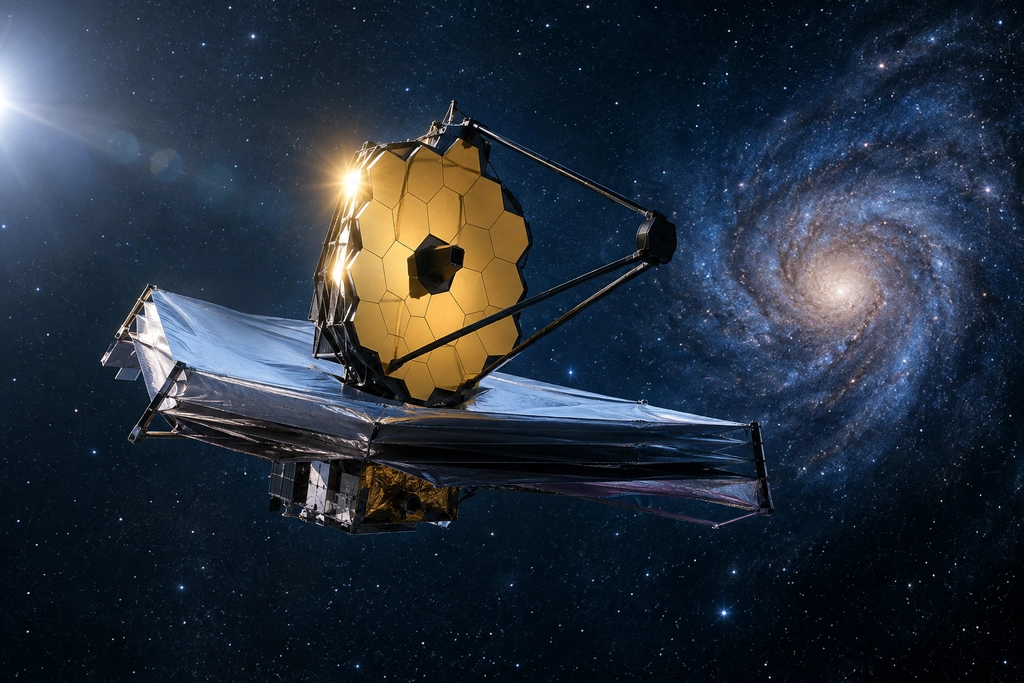
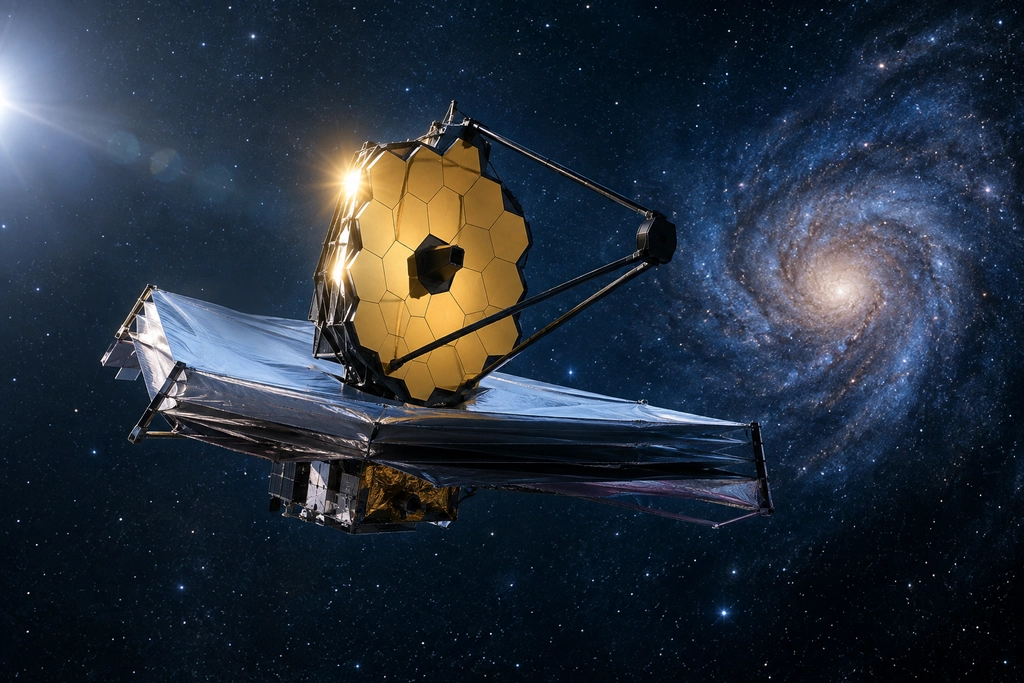
- → JWST mirror collects 6 times more light than Hubble Webb's 18-hexagonal-segment folded primary mirror gathers six times more light than Hubble's, enabling deeper infrared observations. [Ansys]
- → Hubble has made over 1 million observations Since its 1990 launch, Hubble has made more than a million observations, shaping our understanding of the age and structure of the universe. [High Point Scientific]
- → Suggested balloon telescope diameter of 20-30 meters A proposed balloon-borne space telescope concept suggests a mirror-and-balloon design spanning 20 to 30 meters. [Wikipedia]
A new chip design from the University of Michigan could use 59 times less power than a GPU-based alternative, cutting the projected weight of the Habitable Worlds Observatory satellite from 1,100 kg to 193 kg and saving an estimated $430 million over a 25-year mission, according to Michigan Engineering News. That single engineering choice sits alongside four other telescope concepts NASA is weighing for launch in the 2030s. Below is what the numbers say about where space observation is headed next.
1How Much Power Could a New Chip Design Save Future Telescopes?
A memory-centric SRAM chip design tested for the Habitable Worlds Observatory uses 59 times less power than a GPU-based option. This drops satellite weight from 1,100 kg to 193 kg and could save $430 million over 25 years, per Michigan Engineering News, which presented the work at the IEEE Space Computing Conference in August 2026.
| METRIC | VALUE | SOURCE |
|---|---|---|
| SRAM chip power reduction vs GPU | 59 times less power | Michigan Engineering News |
| Satellite weight before optimization | 1100 kg | Michigan Engineering News |
| Satellite weight after SRAM optimization | 193 kg | Michigan Engineering News |
| Cost savings over 25-year mission | 430 million USD | Michigan Engineering News |
| IEEE Space Computing Conference presentation month | August month | Michigan Engineering News |
| Source: Michigan Engineering News | ||
Data-movement bottlenecks have long limited how much exoplanet imaging a telescope can process on its own, and this design tackles that directly by keeping computation closer to memory. The 907 kg weight reduction matters because every kilogram launched into orbit carries a real dollar cost, something also visible in coverage of the Ariane 6 rocket's launch capacity. Readers who followed the GOES-U satellite launch will recognize how weight and power budgets shape mission design long before liftoff.
2Which Telescope Designs Is NASA Considering for the 2030s?
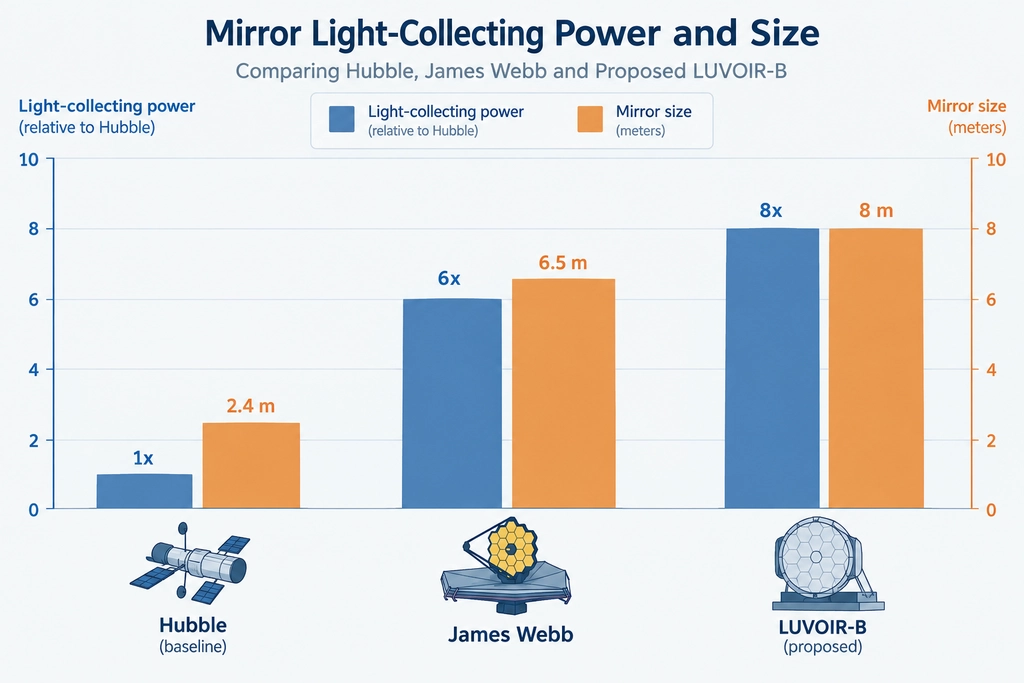
NASA is evaluating four candidate telescopes for a possible 2030s launch: Origins Space Telescope, Lynx X-ray Observatory, Habitable Exoplanets Observatory (HabEx), and LUVOIR, according to Wikipedia. A separate balloon-borne telescope concept proposes a mirror 20 to 30 meters wide, while LUVOIR-B would carry an 8-meter segmented mirror.
| METRIC | VALUE | SOURCE |
|---|---|---|
| NASA candidate telescope designs for 2030s | 4 designs | Wikipedia |
| Balloon telescope mirror size | 20-30 meters | Wikipedia |
| LUVOIR-B segmented mirror diameter | 8 meters | Wikipedia |
| Source: Wikipedia | ||
None of these four designs has been finalized, which is why the balloon-telescope concept still gets serious attention despite sounding unconventional next to a rocket-launched satellite. An 8-meter LUVOIR-B mirror would outsize Webb's own mirror, giving a sense of how ambitious these proposals are compared with missions covered in NASA's Perseverance rover updates. The gap between concept and construction is also why standardized planning, discussed at the Space and Things podcast, keeps coming up among mission planners.
3How Do Hubble and Webb Compare Today?
Hubble launched in 1990 and has logged more than a million observations, per High Point Scientific. James Webb launched December 25, 2021, and its 18-hexagonal-segment mirror gathers six times more light than Hubble's, according to Ansys. Chandra X-ray Observatory launched in 1999 and remains part of NASA's active fleet.
| METRIC | VALUE | SOURCE |
|---|---|---|
| Hubble Space Telescope launch year | 1990 year | High Point Scientific |
| James Webb Space Telescope launch date | December 25, 2021 date | Ansys |
| Chandra X-ray Observatory launch year | 1999 year | High Point Scientific |
| JWST mirror light-collection advantage over Hubble | 6 times more light | Ansys |
| JWST mirror segments | 18 hexagonal segments | Ansys |
| Hubble total observations | 1,000,000+ observations | High Point Scientific |
| Source: High Point Scientific | ||
Webb's light-collecting advantage comes from its folded mirror design, which unfolded after launch to reach a size no single rocket fairing could carry assembled. That million-plus observation count from Hubble shows why the telescope's recent hardware issues, detailed in coverage of Hubble's return to operations with one gyroscope, drew so much attention from astronomers. Chandra's continued operation since 1999 also complements newer X-ray research described in recent X-ray exoplanet studies.
4What Happened at the KISS Symposium on Telescope Standardization?
The Keck Institute for Space Studies at Caltech held a three-day symposium in 2025 focused on standardizing telescope development. The event brought together researchers examining how shared components and processes could speed up future observatory construction.
| METRIC | VALUE | SOURCE |
|---|---|---|
| KISS Symposium event duration | 3 days | Keck Institute for Space Studies (Caltech) |
| Source: Keck Institute for Space Studies (Caltech) | ||
A three-day format signals a working symposium rather than a public showcase, aimed at engineers comparing notes on shared hardware standards. This kind of coordination echoes discussions in fields like satellite weather tracking, covered in the piece on NOAA's GOES-R series nearing completion, where standardized components also cut costs across a program.
5How Do Experts Rate Progress on Next-Generation Telescopes?
Data processing power efficiency scores 9 out of 10, mission cost efficiency scores 8 out of 10, and JWST's optical resolution advancement over Hubble scores 7 out of 10, per Michigan Engineering News and Ansys. Design maturity of 2030s candidate telescopes sits at 5 out of 10, and standardization progress rates 4 out of 10, according to the Keck Institute for Space Studies.
| METRIC | VALUE | SOURCE |
|---|---|---|
| Data processing power efficiency | 9 /10 | Michigan Engineering News |
| Mission cost efficiency | 8 /10 | Michigan Engineering News |
| Design maturity of candidate 2030s telescopes | 5 /10 | Wikipedia |
| Optical resolution advancement over Hubble (JWST) | 7 /10 | Ansys |
| Standardization progress in telescope development | 4 /10 | Keck Institute for Space Studies (Caltech) |
| Source: Michigan Engineering News | ||
The gap between a 9-out-of-10 power efficiency score and a 4-out-of-10 standardization score tells the real story here: individual breakthroughs are outpacing the coordination needed to combine them into a finished spacecraft. This mirrors patterns seen in other high-cost engineering fields, including the launch-readiness debates around Boeing's Starliner delays, where isolated technical wins didn't always translate into on-schedule missions.
6What Is the Timeline From Hubble to the Habitable Worlds Observatory?
Hubble launched in 1990, Chandra in 1999, and James Webb in 2021. The Keck Institute held its standardization symposium in 2025, Michigan researchers published their memory-centric chip study in 2026, and NASA's candidate telescopes target launch sometime in the 2030s.
| METRIC | VALUE | SOURCE |
|---|---|---|
| Hubble Space Telescope launch | 1990 year | High Point Scientific |
| Chandra X-ray Observatory launch | 1999 year | High Point Scientific |
| James Webb Space Telescope launch | 2021 year | Ansys |
| KISS Symposium on standardized telescopes | 2025 year | Keck Institute for Space Studies (Caltech) |
| Memory-centric chip study for Habitable Worlds Observatory | 2026 year | Michigan Engineering News |
| NASA candidate telescope launches (projected) | 2030s decade | Wikipedia |
| Source: High Point Scientific | ||
Roughly a decade separates each major milestone, from Hubble to Chandra to Webb, and the pace between concept studies like the 2026 chip design and an actual 2030s launch suggests that gap may hold steady. Space agencies elsewhere face similar multi-year timelines, as seen in reporting on the first Nigerian astronaut's Blue Origin flight and the broader push covered in the search for Planet Nine, both of which depend on hardware developed years in advance.
Complete Data Reference
Sortable table of all verified data points. Click any column header to sort.
| Metric | Value | Source | Year |
|---|---|---|---|
| SRAM chip power reduction vs GPU | 59 times less power | Michigan Engineering News | 2026 |
| Satellite weight before optimization | 1100 kg | Michigan Engineering News | 2026 |
| Satellite weight after SRAM optimization | 193 kg | Michigan Engineering News | 2026 |
| Cost savings over 25-year mission | 430 million USD | Michigan Engineering News | 2026 |
| IEEE Space Computing Conference presentation month | August month | Michigan Engineering News | 2026 |
| NASA candidate telescope designs for 2030s | 4 designs | Wikipedia | 2025 |
| Balloon telescope mirror size | 20-30 meters | Wikipedia | 2025 |
| LUVOIR-B segmented mirror diameter | 8 meters | Wikipedia | 2025 |
| Hubble Space Telescope launch year | 1990 year | High Point Scientific | 2025 |
| James Webb Space Telescope launch date | December 25, 2021 date | Ansys | 2025 |
| Chandra X-ray Observatory launch year | 1999 year | High Point Scientific | 2025 |
| JWST mirror light-collection advantage over Hubble | 6 times more light | Ansys | 2025 |
| JWST mirror segments | 18 hexagonal segments | Ansys | 2025 |
| Hubble total observations | 1,000,000+ observations | High Point Scientific | 2025 |
| KISS Symposium event duration | 3 days | Keck Institute for Space Studies (Caltech) | 2025 |
| Data processing power efficiency | 9 /10 | Michigan Engineering News | 2026 |
| Mission cost efficiency | 8 /10 | Michigan Engineering News | 2026 |
| Design maturity of candidate 2030s telescopes | 5 /10 | Wikipedia | 2025 |
| Optical resolution advancement over Hubble (JWST) | 7 /10 | Ansys | 2025 |
| Standardization progress in telescope development | 4 /10 | Keck Institute for Space Studies (Caltech) | 2025 |
| Hubble Space Telescope launch | 1990 year | High Point Scientific | 1990 |
| Chandra X-ray Observatory launch | 1999 year | High Point Scientific | 1999 |
| James Webb Space Telescope launch | 2021 year | Ansys | 2021 |
| KISS Symposium on standardized telescopes | 2025 year | Keck Institute for Space Studies (Caltech) | 2025 |
| Memory-centric chip study for Habitable Worlds Observatory | 2026 year | Michigan Engineering News | 2026 |
| NASA candidate telescope launches (projected) | 2030s decade | Wikipedia | 2030 |
Methodology
Some proposed telescope missions, such as LUVOIR and HabEx, remain concept studies without confirmed funding or launch dates, so figures tied to them may change. Chip performance numbers come from simulated lab results rather than an in-orbit test, so real-world power savings could differ once hardware is built and flown.
- Sources consulted: 7
- Sources cited: 5
- Data range: 2025-01-01 to 2026-09-18
- Freshness: 4 current-year, 6 last-year, 0 older
- Update schedule: Quarterly
Frequently Asked Questions
What is the Habitable Worlds Observatory?
The Habitable Worlds Observatory is a planned NASA telescope aimed at finding and studying Earth-like planets around other stars. A new chip design being tested for it could use 59 times less power than a GPU-based option, which would cut the satellite's weight from 1,100 kg to just 193 kg. [Michigan Engineering News]
How much money could new chip designs save NASA?
Researchers at the University of Michigan found that a memory-centric chip design could save roughly $430 million over a 25-year mission. This comes from lowering onboard power needs and reducing the physical weight the spacecraft has to carry into orbit. [Michigan Engineering News]
What telescopes is NASA considering for launch in the 2030s?
NASA has been weighing four candidate telescope designs for a possible 2030s launch: the Origins Space Telescope, the Lynx X-ray Observatory, the Habitable Exoplanets Observatory (HabEx), and LUVOIR. Each one targets a different piece of the puzzle, from exoplanets to distant galaxies. [Wikipedia]
How does the James Webb Space Telescope compare to Hubble?
The James Webb Space Telescope's folded, 18-segment mirror collects six times more light than Hubble's mirror. This lets Webb see fainter, more distant objects in infrared light, giving scientists a clearer look at galaxies formed soon after the universe began. [Ansys]
How many observations has the Hubble Space Telescope made?
Since it launched in 1990, the Hubble Space Telescope has made more than a million observations. That body of work has shaped much of what we know today about how old the universe is and how it is put together. [High Point Scientific]
What is a balloon-borne space telescope?
A balloon-borne space telescope is a concept that pairs a giant mirror with a high-altitude balloon instead of a rocket-launched satellite body. One proposed design suggests a mirror spanning 20 to 30 meters, which would be far larger than anything flown on a traditional space telescope so far. [Wikipedia]
Why does chip design matter for future space telescopes?
Chip design matters because telescopes like the planned Habitable Worlds Observatory need to move huge amounts of image data without burning too much power or adding too much weight. A SRAM-based chip tested by University of Michigan researchers cuts power use by 59 times compared to a GPU setup, directly lowering launch costs. [Michigan Engineering News]
What is in-space telescope assembly and why is NASA studying it?
In-space telescope assembly means building or putting together a telescope's parts after they reach orbit, rather than launching it fully assembled. NASA's iSAT study looks at this method as a way to support future observatories that may need mirrors too large to fit inside a single rocket. [science.nasa.gov]
What comes after Hubble and Webb?
After Hubble and Webb, NASA is looking at four next-generation designs for launch in the 2030s: Origins Space Telescope, Lynx X-ray Observatory, HabEx, and LUVOIR. Some designs, like LUVOIR-B, would carry a segmented mirror roughly 8 meters across, larger than Webb's mirror. [Wikipedia]
How are researchers keeping telescope costs down?
Researchers are focused on lighter, lower-power hardware since every kilogram launched into space costs money. The Michigan team's chip work shows how dropping satellite weight from 1,100 kg to 193 kg through smarter data processing can save an estimated $430 million across a 25-year mission. [Michigan Engineering News]
Sources & References
- Michigan Engineering News. "Designing memory-centric chips for future space telescopes." https://news.engin.umich.edu/2026/08/designing-memory-centric-chips-for-future-space-telescopes/. Accessed 2026-09-18.
- Wikipedia. "List of proposed space telescopes." https://en.wikipedia.org/wiki/List_of_proposed_space_telescopes. Accessed 2026-09-18.
- High Point Scientific. "Future Space Telescopes." https://www.highpointscientific.com/astronomy-hub/post/future-space-telescopes. Accessed 2026-09-18.
- Ansys. "Peering Into the Past and Redefining the Future With Space Telescopes." https://ansys.synopsys.com/blog/peering-into-past-redefining-future-with-space-telescopes. Accessed 2026-09-18.
- science.nasa.gov. "NASA in-Space Assembled Telescope (iSAT) Study." https://science.nasa.gov/astrophysics/programs/exep/technology/in-space-assembly/isat_study/. Accessed 2026-09-18.
Last updated: September 18, 2026