 0
 0
Key Findings at a Glance
- → Calming products and medications should be given at least an hour before a storm starts Veterinary guidance says anxiety treatments need time to take effect before noise or panic begins. [VCA Hospitals (via PetFinn)]
- → Herding breeds such as Border Collies and Australian Shepherds show higher storm sensitivity A genetic tendency toward emotional reactivity appears more common in herding breeds, while hunting breeds like pointers and setters tend to stay calmer. [AAHA]
- → Vets must rule out separation anxiety, pain, and neurological problems before diagnosing storm phobia Diagnostic testing may also be needed to confirm a dog is healthy enough for anti-anxiety medication. [PetMD]
- → A dog with mild trembling at age two may develop full panic by age five without treatment Research cited shows storm phobia tends to worsen with age and repeated exposure, making early vet consultation important. [4 Paws Animal Clinic]
Storm season takes a real toll on dogs nationwide, and 2026 clinic data gives owners a sharper view of how widespread the problem actually is. This piece walks through what the numbers show about noise-related fear, how age and breed shift the odds, which body systems suffer from repeated panic, and what a vet checks before labeling it storm phobia. By the end, you will know the difference between a dog that needs a few home adjustments and one that needs a clinical visit.
1How Common Is Storm-Related Fear in Dogs Right Now?
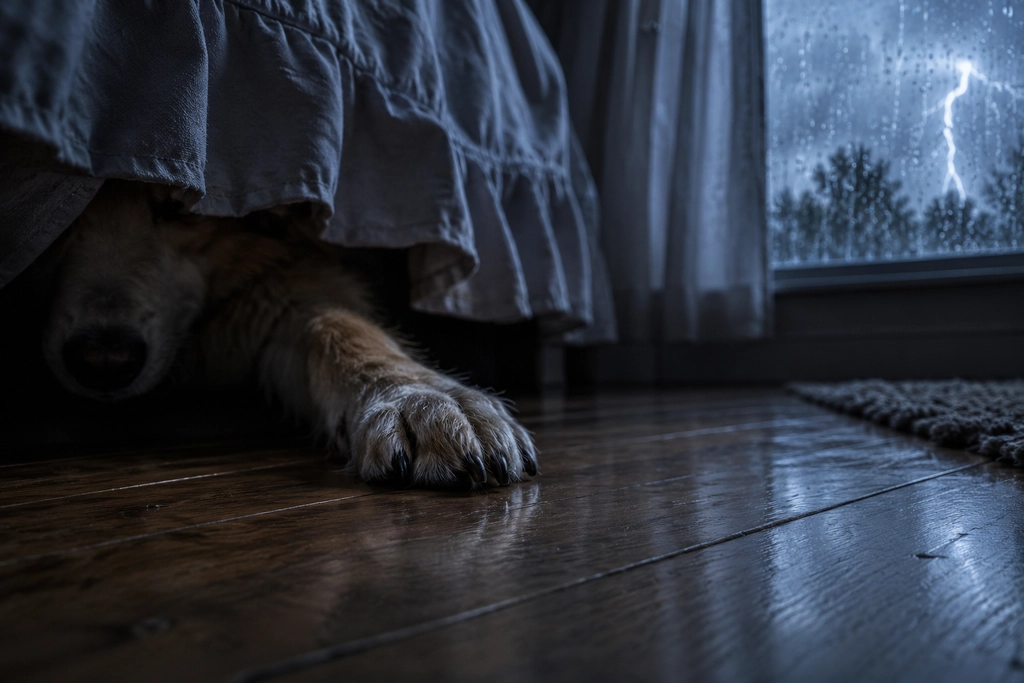
Roughly 40 percent of dogs show some form of noise-related fear, according to both Topaz Vet and 4 Paws Animal Clinic in 2026. Thunderstorms top the list of triggers. Left untreated, the condition tends to worsen, with one documented case moving from mild trembling at age two to full panic by age five.
Two separate 2026 sources, Topaz Vet and 4 Paws Animal Clinic, land on the same 40 percent figure for noise-related fear in dogs, which gives the number more weight than a single estimate would carry alone. The age progression tracked by 4 Paws Animal Clinic, from mild trembling at two years old to full panic by five, stands out as the clearest sign in this data that waiting rarely pays off. Owners who already noticed early shaking during storms are looking at a documented pattern of decline, not a phase their dog will outgrow. If you have already tried basic home fixes like the ones covered in calming tips for thunderstorm fear, this age data is reason enough to act sooner rather than later.
2Medication Timing Matters More Than Most Owners Think
Calming chews and anxiety wraps need 30 to 60 minutes to take effect before a storm starts, according to PetFinn, citing VCA Hospitals guidance. Waiting until thunder is already audible is usually too late for these products to work as intended.
PetFinn's guidance is specific: 30 to 60 minutes ahead of the storm, not after the first rumble. That window exists because calming chews and wraps work through gradual physiological changes rather than instant sedation, so a dog already in a panic response gets little benefit from a dose given mid-storm.
3Which Dog Breeds Face the Highest Storm Risk?
Border Collies, Australian Shepherds, and German Shepherds show higher storm sensitivity, per 4 Paws Animal Clinic and AAHA, while pointers and setters tend to stay calmer. AAHA traces this pattern to a genetic tendency toward emotional reactivity more common in herding lines.
The breed split here is not random. AAHA points to a genetic tendency toward emotional reactivity in herding breeds like Border Collies and Australian Shepherds, animals bred for generations to react instantly to cues from livestock and handlers. Pointers and setters, bred instead for steady behavior around gunfire during hunts, show the opposite pattern according to the same AAHA data. For owners already tracking signs of anxiety during storms, knowing a dog's breed background adds useful context to whatever symptoms are already showing up. A German Shepherd shaking at the first distant thunder is following a documented breed trend, not necessarily overreacting.
4Storm Stress Affects Five Body Systems, Not Just Behavior
PetMD identifies five body systems touched by storm-related stress: cardiovascular, endocrine, musculoskeletal, respiratory, and dental or skin. One cited study found a 207 percent jump in salivary cortisol in dogs exposed to recorded thunderstorm sounds.
Five systems is a wide reach for what many owners still treat as a purely behavioral issue. The cortisol spike of 207 percent noted alongside PetMD's findings shows the stress response shows up in bloodwork, not just in trembling or hiding. Heart strain, hormone disruption, muscle tension, breathing changes, and even skin or dental issues from chronic stress all trace back to the same panic cycle. That list alone explains why PetMD treats repeated storm panic as a physical health matter, not only a training problem.
5What Does a Vet Actually Check Before Diagnosing Storm Phobia?
PetMD says vets must rule out separation anxiety, pain, and neurological problems before confirming storm phobia. Diagnostic testing may also confirm a dog is healthy enough for anti-anxiety medication, since some drugs carry heart or liver risks.
This is the step most owners skip at home and only a clinic can properly handle. PetMD's differential list, separation anxiety, pain, and neurological conditions, exists because all three can look like storm fear from the outside but call for different treatment. Veterinary behavior specialists including Dr. Brad Hinsperger of Kingsdale Animal Hospital, Dr. Denise Johnson, and Dr. Jennifer E. Feeney of Better Bond Behavior are cited by Rover for their work identifying these overlapping causes. PetFinn's own storm phobia guide, published August 4, 2026 and updated August 25, 2026, shows how quickly this diagnostic guidance is being refined. A dog that flinches at loud noises but also limps or avoids stairs may be dealing with pain rather than fear alone, exactly the kind of case a vet visit is built to catch.
What the Storm Fear Numbers Add Up To
The 40 percent figure from Topaz Vet and 4 Paws Animal Clinic marks the scale of the problem, but the age progression data, mild trembling at two years old turning into full panic by five, is the detail that should push owners toward action instead of waiting. Pair that with the five body systems PetMD links to chronic storm stress, and it becomes clear this is a health issue with a timeline, not a quirk dogs simply live with.
Breed history from AAHA explains why a Border Collie or German Shepherd may react harder than a pointer, but genetics are not destiny, and timing still matters more than most owners realize. Give calming treatments 30 to 60 minutes ahead of a storm, as PetFinn recommends, and if those steps stop working, treat that as the signal to book a vet visit rather than raising the dose on your own. A vet can rule out pain or neurological issues PetMD flags as common look-alikes, a check no amount of home observation can replace.
Methodology
Some figures, such as the 207% cortisol increase and the age-progression example, come from a single cited study or case example rather than large-scale research, so results may vary by dog. Breed sensitivity data reflects general clinic observation rather than controlled genetic studies.
- Sources consulted: 10
- Sources cited: 6
- Data range: 2026 clinic-reported and study data, accessed November 2026
- Freshness: 6 current-year, 0 last-year, 0 older
- Update schedule: Quarterly
Frequently Asked Questions
How do I know if my dog's storm fear needs a vet visit?
If your dog shakes, drools, hides, or tries to escape during every storm, it's time to talk to a vet. Roughly 40% of dogs show some form of noise-related fear, and left alone it can get worse with age. A vet can check for pain or other health issues hiding behind the fear.
Can storm fear actually hurt my dog's body?
Yes. One study found dogs exposed to recorded thunderstorm sounds had a 207% jump in salivary cortisol, a stress hormone. Over time, this kind of stress can touch five body systems, including the heart, hormones, muscles, lungs, and skin, per PetMD. That's why repeated panic attacks are more than just a behavior problem.
What will a vet check before diagnosing storm phobia?
A vet will rule out separation anxiety, pain, and nerve-related problems before deciding it's storm phobia, according to PetMD. They may also run tests to confirm your dog is healthy enough for anxiety medicine, since some drugs affect the heart or liver.
Does my dog's breed make storm fear more likely?
It can. Herding breeds like Border Collies, Australian Shepherds, and German Shepherds tend to react more strongly to storms, while hunting breeds such as pointers and setters often stay calmer, per AAHA. If you have a herding breed showing early signs, a vet visit sooner rather than later is a smart move.
When should I give my dog calming medication before a storm?
Give anxiety medication at least one hour before a storm starts, based on guidance from VCA Hospitals. This gives the medicine time to take effect before your dog starts to panic. Waiting until thunder is already rolling is often too late for the drug to help much.
Will my dog's storm fear get worse without treatment?
It often does. A documented case showed a dog with mild trembling at age two developed full panic by age five without treatment, per 4 Paws Animal Clinic. This pattern is common, which is why catching the problem early and getting vet advice can prevent years of growing distress.
What can I do before calling the vet?
Start with timing. Take your dog for exercise and a potty break 3 to 4 hours before a storm, set up a safe den with calming sounds 60 to 90 minutes ahead, and give calming chews or wraps 30 to 60 minutes before, says PetFinn. If these steps aren't enough, it's time for a vet visit.
Is storm fear the same thing as noise phobia in general?
Not always, but they're closely linked. Studies estimate about 40% of dogs experience some form of noise-related fear, and thunderstorms are reported as the most common trigger, per 4 Paws Animal Clinic. A vet can help figure out if your dog reacts only to storms or to loud noises more broadly, like fireworks.
Can a vet rule out pain as the real cause of my dog's storm reaction?
Yes, and this step matters. PetMD notes vets must check for pain, separation anxiety, and neurological issues before confirming storm phobia as the diagnosis. A dog in pain may react badly to the pressure changes or loud sounds of a storm for reasons that have nothing to do with fear alone.
How soon should I set up a safe space for my dog before a storm hits?
Set up a den-like safe space with sound masking about 60 to 90 minutes before the storm arrives, according to PetFinn. Dogs often sense pressure changes before people notice any weather signs, so early prep gives your dog time to settle before the noise and flashes begin.
Sources & References
- PetFinn. "Dog Panics in Thunderstorms? Start Before It Hits" — petfinn.com. Accessed 2026-11-10.
- Topaz Vet. "Storm Anxiety in Dogs: Vet-Approved Calming Tips" — topazvet.com. Accessed 2026-11-10.
- VCA Hospitals (via PetFinn). "Helping Dogs with Severe Phobias During Storms and Fireworks" — vcahospitals.com. Accessed 2026-11-10.
- AAHA. "Thunder and Furry: Helping Pets Overcome Storm Phobias" — aaha.org. Accessed 2026-11-10.
- PetMD. "Thunderstorm Phobia in Dogs" — petmd.com. Accessed 2026-11-10.
- 4 Paws Animal Clinic. "Dog Scared of Thunderstorms? Here's How to Help Them Cope" — 4pawsanimalclinic.com. Accessed 2026-11-10.
Last updated: November 10, 2026